
Subsidiary Company Registration in India for Foreign Companies
StartBusiness sets up Indian subsidiaries for foreign companies: a separate Indian private limited company owned by your parent. We check your FDI (foreign direct investment) route, legalise parent documents, incorporate with the MCA and complete the first RBI reporting. Fees start at ₹19,999 plus government fees and 18% GST. Timelines depend on documents, legalisation and bank onboarding.
Starter
Incorporated, with your subscriber capital reported. For parents bringing in only the initial subscription capital for now.
- FDI route and sectoral cap assessment
- Name reservation, and DSC and DIN for 2 directors
- Legalisation coordination for parent documents
- Parent board resolution and authorised signatory pack
- MOA and AOA with custom clauses
- SPICe+ incorporation, including PAN, TAN, EPFO and ESIC
- Professional tax registration, where the state levies it
- After incorporation
- Bank account coordination with your AD bank
- First board meeting and director disclosures (MBP-1, DIR-8)
- First auditor appointed
- Nominee declarations (MGT-4, MGT-5, MGT-6), where a nominee holds shares
- Entity Master on FIRMS and FC-GPR for subscriber shares
- INC-20A once subscription money is received
Launch
Most popular. Funding reported and registrations in place. For parents remitting capital beyond the initial subscription.
- Everything in Starter, plus
- FIRC and KYC coordination with your AD bank
- GST registration
- MSME Udyam registration
- Shop Act registration
- Further capital, up to 2 allotments
- Valuation report coordinated
- Share certificates issued and stamped
- PAS-3 and FC-GPR within 30 days of each allotment
Growth
First-year company-law and FEMA filings, as listed. For companies that want first-year filings handled.
- Everything in Launch, plus
- Annual compliance for the first financial year (full list in Annual compliance)
- Director’s report, AOC-4 and MGT-7
- FLA return to the RBI
Launch plus a year of annual compliance costs ₹89,999 separately. Growth saves you ₹10,000.
Annual compliance
Growth clients: from the second financial year. Starter or Launch clients: from the first financial year.
- Included each year
- Director disclosures (MBP-1, DIR-8) for the year
- Director’s report drafted
- AOC-4 and MGT-7 filed
- ADT-1 when an auditor is appointed at an AGM
- DPT-3 by 30 June, where applicable
- FLA return by 15 July
- DIR-3 KYC Web, when due
Not included: statutory audit, income-tax return, transfer pricing report (Form 48), master file, TDS and GST returns, payroll, and event-based changes such as new directors or capital increases. These are quoted separately.
Note: Government fees and stamp duty are charged at actuals, and 18% GST is added to professional fees. First financial year: ends on 31 March, or 31 March of the next year if you incorporate between January and March. Not sure whether a subsidiary, branch office or liaison office fits? Talk to a CA — free 15-minute call
What is an Indian subsidiary?
An Indian subsidiary is a company incorporated in India in which a foreign company holds more than half of the total voting power or controls the composition of the board. It is a separate legal entity, so the parent’s liability is generally limited to its investment.
Most foreign parents use a private limited company, which needs at least two shareholders. The second can be another group company or a nominee holding shares on the parent’s behalf. Where a nominee is used, both owners declare the arrangement to the company, which reports it to the ROC (Registrar of Companies).
Subsidiary vs branch office vs liaison office
Investing as an individual rather than a company? See private limited company registration.
Who this service is for
Sector-specific FDI conditions and licences may still apply.
IT and SaaS companies
Software, SaaS and technology businesses entering India.
Manufacturers and supply-chain businesses
Production, sourcing and supply-chain operations in India.
E-commerce and consumer brands
Brands selling to Indian customers.
Professional services firms
Consulting and services firms serving Indian clients.
R&D and technology centres
Captive R&D units and technology centres.
FDI routes and sector limits
Short answer: most sectors allow 100% foreign ownership under the automatic route, with no prior government approval. A few are capped, need approval or are prohibited.
Sources: Consolidated FDI Policy 2020, Press Note 4 (2021), telecom, Press Note 1 (2026), insurance.
Investors linked to countries bordering India
Short answer: an entity or citizen of a country sharing a land border with India (China, Pakistan, Bangladesh, Nepal, Bhutan, Myanmar or Afghanistan) can invest only with government approval. An investor incorporated elsewhere can use the automatic route if beneficial ownership from those countries is non-controlling and no more than 10%.
- Beneficial ownership is tested at the investor-entity level, so we trace every layer of your group.
- Sectoral caps and conditions still apply, and the Indian company must report the investment to DPIIT. Reporting is not approval.
Sources: PIB, 10 March 2026; DPIIT Press Note 2 (2026).
Why StartBusiness
Named CA or CS
A named CA or CS runs your project from structuring to RBI reporting.
Every filing reviewed
Every MCA and RBI filing is reviewed before submission.
Fixed professional fees
Fixed professional fees, with government charges at actuals.
Legalised once
Document routes confirmed first, so each document is legalised once.
Why 1,000+ Founders Trust StartBusiness
From documentation to MCA approvals, our experts manage every step of your incorporation—so you can focus on building your business instead of paperwork.
Day Turnaround
Estimated incorporation timeline.
Dedicated CA
A single expert from start to finish.
Pre-Filing Review
Every application is reviewed before submission.
Hidden Charges
Clear pricing with government fees at actuals.
Compliance Kit
Everything you need for your Foreign Subsidiary.
Documents required
What the foreign parent, directors and registered office need to provide.
Documents issued abroad must be notarised and apostilled, or consularised where apostille is not available.
What You Get:
Full-Service Foreign Subsidiary Setup
You provide your documents. We handle everything else — every form, every filing, every follow-up with government portals — until your business is live.
Documents We Prepare for You
- FDI route and sectoral cap assessment
- Legalisation coordination for parent documents
- Parent board resolution and authorised signatory pack
- MOA and AOA with custom clauses
- DSC and DIN for 2 directors
Registrations We File
- Name reservation on MCA
- SPICe+ incorporation, including PAN, TAN, EPFO and ESIC
- Entity Master on FIRMS
- FC-GPR for subscriber shares
- INC-20A once subscription money is received
Your Registration, Step by Step
A clear timeline from document upload to certificate — no guesswork, no waiting in the dark.
Typical total: 25-35 working days
Step 1
FDI and ownership review
Sector, route, land-border position and shareholders.
Step 2
Parent documents
Prepared, signed and legalised in the country of issue.
Step 3
DSCs and name approval
Digital signatures for directors; name reserved on MCA.
Step 4
MCA incorporation
SPICe+ filed; certificate issued with PAN and TAN.
Step 5
Bank and capital
AD bank account opened; parent remits subscription money.
Step 6
FEMA reporting and commencement
FC-GPR within 30 days of issuing shares; INC-20A within 180 days.
Incorporation typically takes 25–35 working days from when we hold complete, legalised documents; legalisation, document corrections, regulatory queries and bank onboarding can extend it. Incorporation creates the company. Regulated activities may still need licences.
Total set-up cost
- Government fees and stamp duty: vary by state and authorised capital.
- Legalisation abroad: paid locally in your country.
- Share capital: no statutory minimum; shares must be priced in line with FEMA valuation rules.
- Ongoing: annual compliance; audit, tax and payroll quoted separately.
Compliance after incorporation
Short answer: company-law filings with the MCA, FEMA (Foreign Exchange Management Act) reporting to the RBI, and tax filings. What applies depends on your dates, ownership and transactions.
A subsidiary of a foreign company cannot be a “small company”, so the full annual return and four board meetings a year apply. Director KYC is now due once every three financial years. Already incorporated? See FEMA compliance and annual ROC compliance.

Talk to a CA before you start
In a free 15-minute call we confirm your FDI route, the documents your parent needs and the right package.
Talk to an ExpertFrequently Asked Questions
Got questions? Find quick, expert answers to everything you need to know before getting started
Yes, in most sectors, under the automatic route. The second shareholder a private company needs can be a group company or a nominee for the parent. Some sectors are capped or need approval, and investors linked to countries bordering India need approval unless they qualify for the 10% non-controlling route.
The parent’s incorporation certificate, charter documents and board resolution; passport and address proof for foreign directors; PAN, Aadhaar and address proof for Indian directors; and registered-office proof. Documents issued abroad must be notarised and apostilled, or consularised where apostille is not available.
Professional fees are ₹19,999 (Starter), ₹54,999 (Launch) or ₹79,999 (Growth), plus 18% GST. Government fees and stamp duty are charged at actuals and vary by state and capital. Annual compliance is ₹35,000 a year. Overseas legalisation, audit and tax filings are separate.
Typically 25–35 working days from when we hold complete, legalised documents. Slow overseas legalisation, document corrections or regulatory queries can extend this. Opening the bank account and filing FC-GPR follow incorporation, and regulated activities may need separate licences.
Apostille is not available, because the UAE is not party to the Hague Apostille Convention. UAE documents are usually certified locally, attested by the UAE Ministry of Foreign Affairs and then by the Indian Embassy or Consulate. The route depends on the document, so we confirm it before you begin.
First, the board meeting and auditor appointment within 30 days, FC-GPR within 30 days of issuing shares and INC-20A within 180 days. Then each year: board meetings, the AGM, AOC-4, MGT-7 and the FLA return by 15 July. International or specified domestic transactions add transfer pricing reporting, and group membership adds master file reporting.

“StartBusiness made our LLP registration incredibly simple. They handled all legal requirements and paperwork efficiently. Highly recommended for any new founders.”
Mr. Hemant Patil
Apaha Institute Of Construction Project Management LLP
“StartBusiness made our LLP registration incredibly simple. They handled all legal requirements and paperwork efficiently. Highly recommended for any new founders.”
Mr. Hemant Patil
Apaha Institute Of Construction Project Management LLP
Blogs & Guides
Explore practical guides, compliance checklists, and expert tax insights written by CAs to help you make smarter business decisions.
GST Registration Turnover Limit in India: Thresholds, Eligibility & Rules
Do you need GST registration? Learn the ₹20 lakh & ₹40 lakh turnover limits and when registration is mandatory.
Presumptive Taxation in India: Sections 44AD, 44ADA & 44AE
Confused about presumptive taxation? Learn Section 44AD, 44ADA & 44AE with eligibility and tax details.
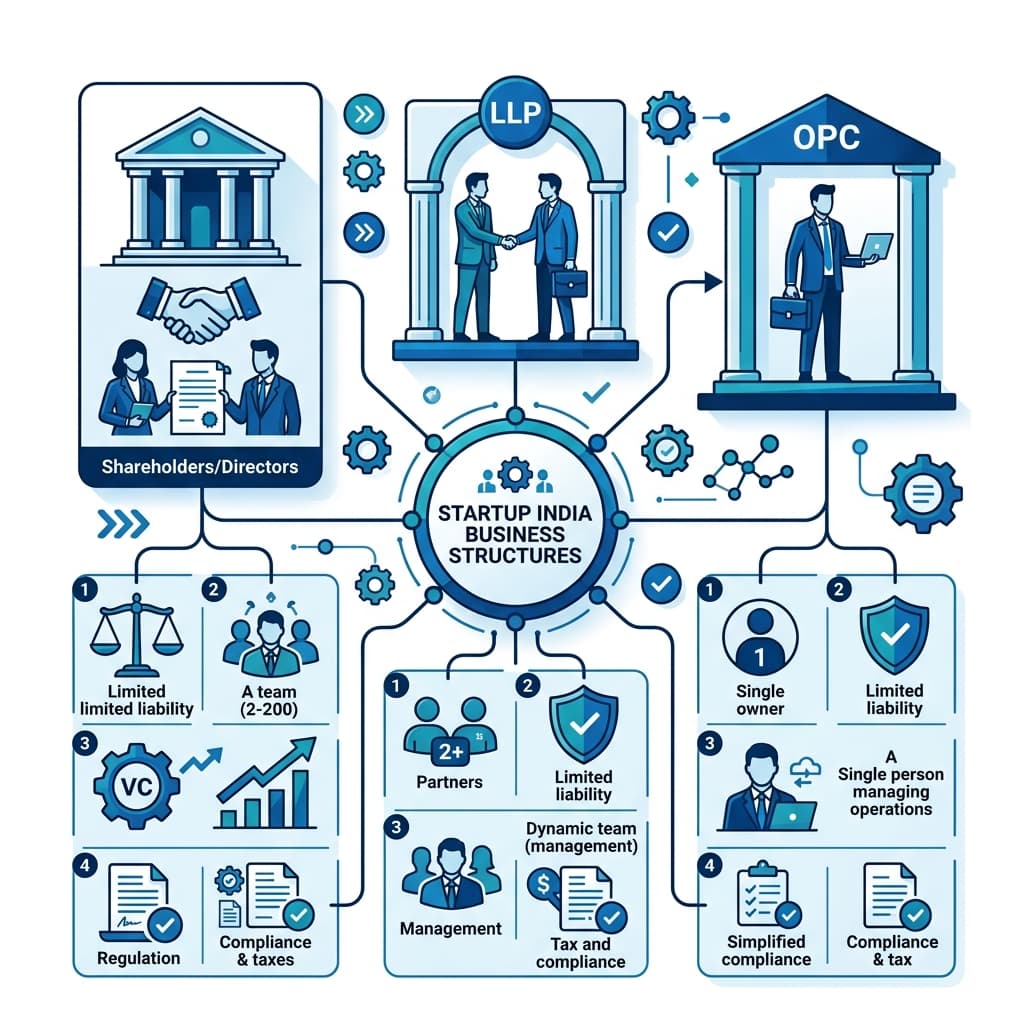
How Much Does It Cost to Register a Company in India?
Government fees, professional fees and hidden costs of registering a Private Limited Company, LLP or OPC.
Official sources: Ministry of Corporate Affairs (MCA) · Income Tax Department